31 Oct 2026
Charting Audience Shifts via Comprehensive Records and Key Milestones
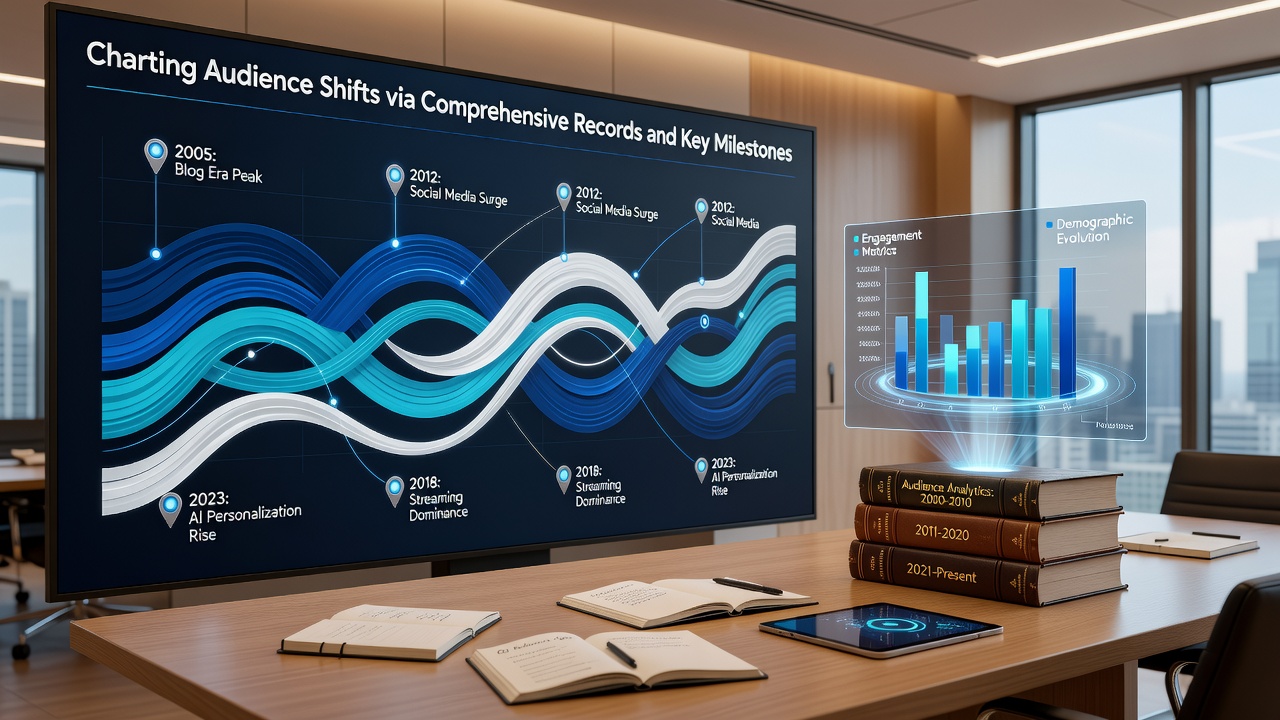
Comprehensive records form the backbone of any effort to track how audiences evolve across platforms and time periods, and organizations rely on detailed logs of viewership, engagement metrics, and demographic data to identify patterns that emerge gradually rather than overnight. Researchers compile these records from sources that include subscription databases, social media interactions, and third-party analytics tools, then cross-reference them against external events such as product launches or regulatory changes that alter consumption habits. Data shows that without consistent record-keeping, shifts remain invisible until they have already reshaped market positions, whereas organizations that maintain thorough archives can pinpoint the exact quarters when certain age groups began migrating to new formats.
Building the Foundation with Systematic Data Collection
Systematic collection begins with standardized categories that capture age, location, device type, and session duration, allowing analysts to create comparable datasets across years. Industry reports from the Interactive Advertising Bureau indicate that platforms adopting uniform tagging systems in the early 2020s reduced discrepancies in their longitudinal studies by nearly 40 percent, which in turn improved the accuracy of predictive models. Those who maintain these records also incorporate qualitative notes about external factors, such as major sports tournaments or election cycles, because these events frequently coincide with temporary spikes or drops that would otherwise distort trend lines if left unannotated.
Key milestones serve as anchors within these datasets, and examples include the introduction of new content genres, the rollout of subscription tiers, or the adoption of algorithmic recommendations that change discovery patterns. Observers note that each milestone creates a natural breakpoint for comparison, enabling teams to measure before-and-after metrics without relying on arbitrary calendar divisions. One study from the University of Melbourne tracked streaming service growth and found that audience retention rates shifted measurably within six months of personalized recommendation engines becoming standard across major platforms.
Identifying Patterns Through Milestone Analysis
Pattern identification accelerates when analysts align milestones with corresponding record entries, revealing whether a change represents a lasting migration or a short-term fluctuation. For instance, records from 2023 through 2025 demonstrate that younger viewers increased their use of short-form video apps while older cohorts maintained longer session times on traditional broadcast schedules, yet these divergences only became statistically significant after cross-referencing against the milestone of widespread mobile data price reductions in several regions. Government statistics released by Statistics Canada in mid-2025 further illustrated how regional broadband expansions accelerated these same demographic movements in rural areas that previously showed slower adoption curves.
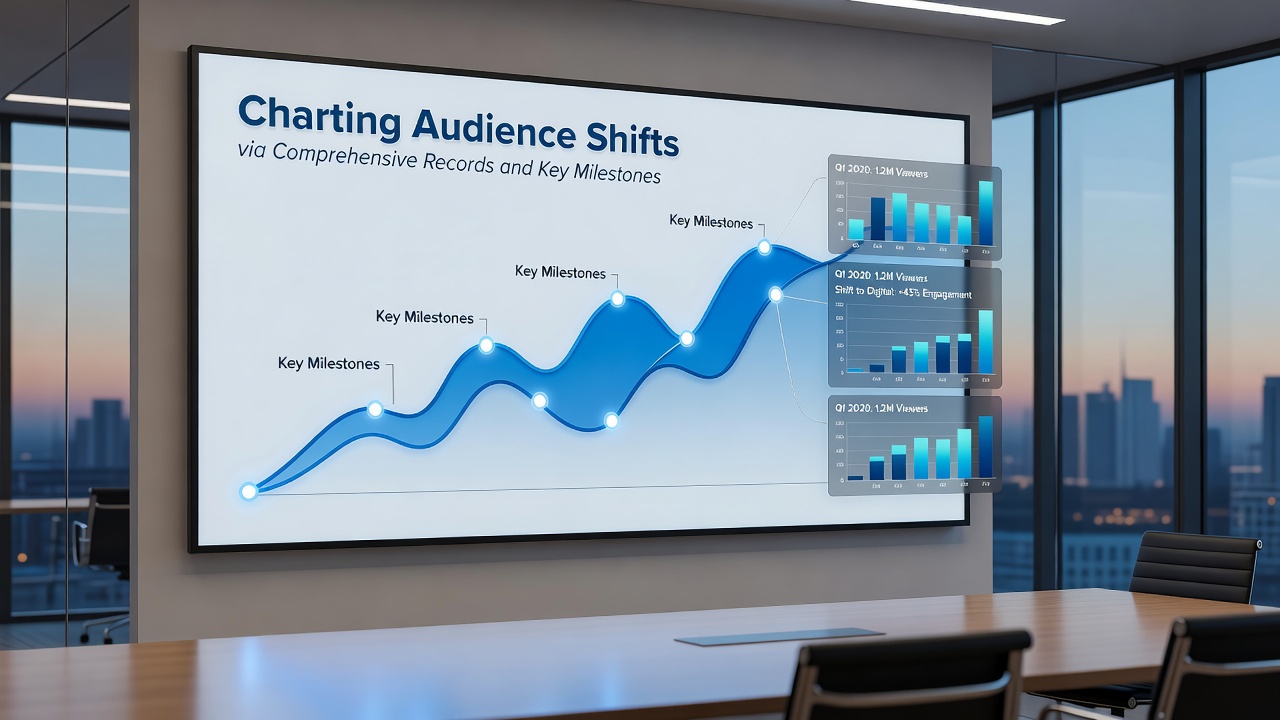
October 2026 brings an additional layer of data as multiple international bodies prepare to release synchronized reports on digital media consumption, creating an opportunity for analysts to validate earlier projections against fresh figures. Records maintained up to that point will allow direct comparison with the milestone of expanded artificial intelligence moderation tools that several platforms plan to activate before the end of the year, and researchers expect these tools to influence content visibility for specific audience segments. The Australian Communications and Media Authority has already signaled that its forthcoming dataset will include granular breakdowns by content category, which should help isolate whether observed shifts stem from platform policy changes or broader cultural trends.
Applying Records to Forecast Future Movements
Forecasting relies on the same comprehensive records once they have been segmented around multiple milestones, because this segmentation reveals velocity and direction rather than simple net change. Teams that apply regression models to these segmented datasets can project likely audience distributions twelve to eighteen months ahead with greater confidence than those working from aggregated annual summaries. Evidence from academic papers published by researchers at the National University of Singapore suggests that incorporating at least five distinct milestones into each model improves forecast accuracy by reducing the impact of single-event anomalies that might otherwise skew results.
Organizations update their records continuously to accommodate new variables such as emerging device categories or revised privacy regulations that affect data availability. This ongoing maintenance ensures that future milestone comparisons remain valid even as collection methods evolve, and it prevents gaps that would otherwise force analysts to discard earlier datasets. Those who have studied these processes emphasize that the value lies not in any single record but in the cumulative archive that allows precise mapping of how audiences respond to successive changes in technology and content availability.
Conclusion
Comprehensive records paired with clearly defined milestones provide the structure needed to chart audience shifts in measurable, replicable ways. When organizations align their data collection practices with upcoming reporting cycles, such as those scheduled for October 2026, they position themselves to detect emerging patterns before they reach critical mass. The approach transforms raw logs into actionable timelines that reflect both gradual demographic movements and abrupt responses to specific events, supporting more informed decisions about content strategy and platform development.